Members of the German American Heritage & Pride organization of Philadelphia ride on an incredibly long bike.
For the first time in years we stayed home for the Fourth of July and spent the day in the city. We were strolling down Chestnut Street in the Old City neighborhood when we stumbled upon the staging area for the annual Philadelphia Independence Day Parade.
Marching bands, ethnic groups and charitable organizations were waiting to participate in the parade that was dedicated to saluting American Armed Forces.
That night a big time concert and fireworks display was held on the Benjamin Franklin Parkway that could rival any event in the U.S. More than 100,000 attended the event. In fact, the Fourth of July is a week-long celebration that attracted more than 3.5 million people.
But despite the big city atmosphere of the evening event, the afternoon parade could have been held in any small town in America. And that’s the thing about Philly. It’s a big city that manages to maintain a small town feel.
More videos can be found here. More pictures from the event are below:
U.S. Navy personnel were honored along with the other armed forces at this year's parade.
You can't have a parade in Philadelphia without the Mummers. They prepare to participate in the parade.
“You can see all the stars if you walk down Hollywood Boulevard,” as Ray Davies of the Kinks so eloquently put it in his warm and melancholy song, Celluloid Heroes. But if you want to see how the stars of Hollywood live, you need to walk along North Beverly Boulevard.
While attending the Financial Times Business of Luxury Summitjust over a week ago, most days I walked to and from the Luxe Hotel on North Rodeo Drive where I was staying to the Beverly Hills Hotel where the event was held. Since L.A. is a car-centric city, I had the wide sidewalks much to myself and the only obstacle I encountered was crossing the four-lane speedway known as Sunset Drive.
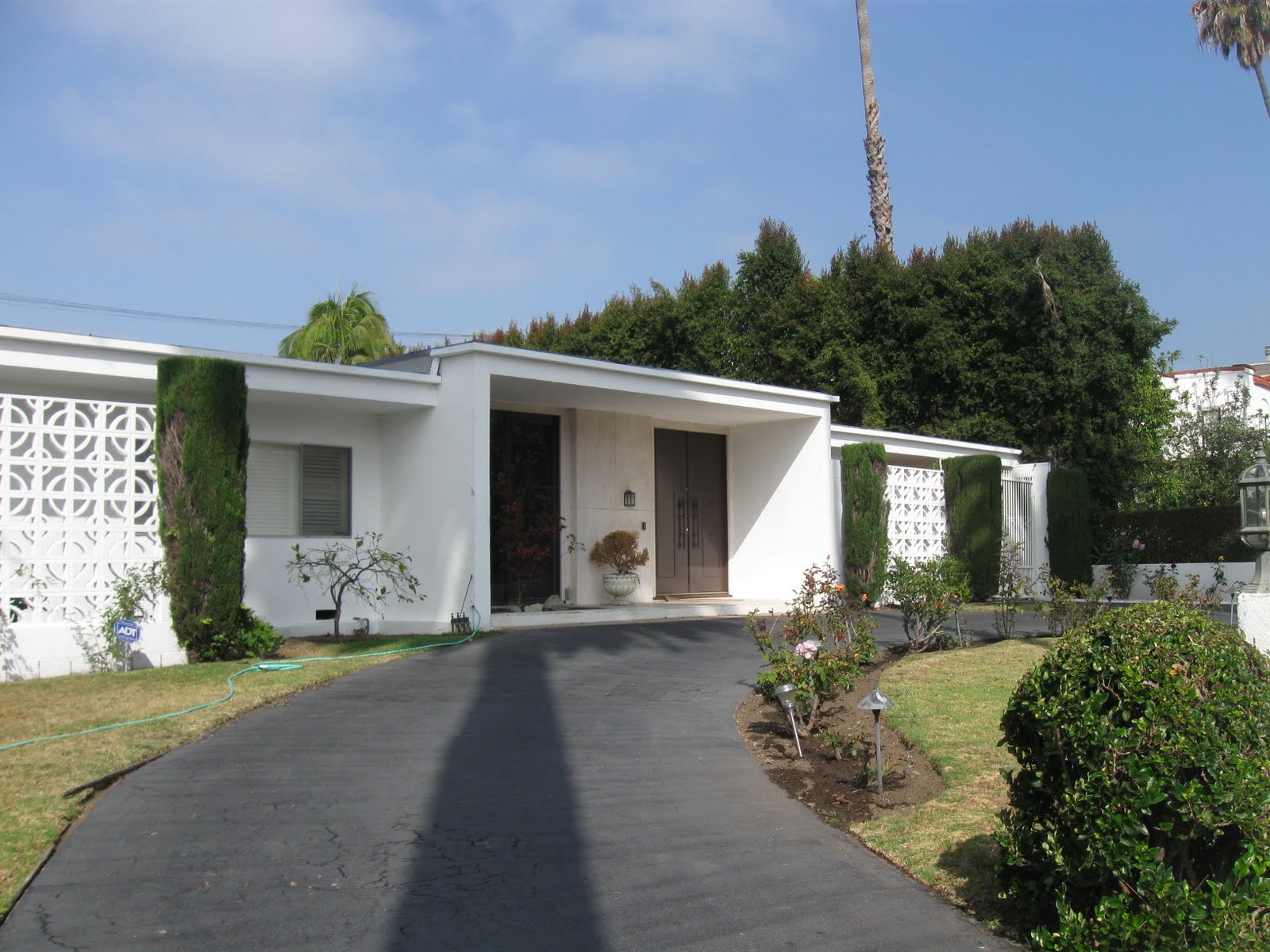
Judging by the houses I passed each day on the palm-tree lined street, I’d have to say the living is quite good and each house displayed a bold and tasteful sense of individuality.
Some of the homes on the boulevard would be quite comfortable in a New England setting. Others looked toward Asia and Italy for their architectural characteristics. Then there are the quintessential concrete structures with terra cotta roofs that are so popular in California. There are basic ranch houses besides elegant mansions. And wooden structures next to houses with slate facades. Traditional structures with elaborate columns that would be at home in the Garden District of New Orleans sharing space with sleek, modern houses at home in a urban setting. The landscaping in front of each is just as diverse in its look and aroma. If there was one dominate flavor, it would have to be Jasmine.
Every house represents the character of an individual yet manages to enhance and embrace the neighborhood.
The taxicab driver taking me to the Beverly Hills Hotel for the FT Business of Luxury Summit Monday morning is a native of Iran and is of Armenian descent. He was moaning on and on about the economy and other things when he suddenly yells in an angry, tired, frustrated voice that combines the unique cadence and flavors of the Middle East and Eastern Europe: “Oh No, Not Larry Keengk.”
The fog of jet lag and an early morning rising was still working its way in my head while I wondered, “Who the heck is Larry Keengk?” Then I looked to my right and there’s CNN talk show host Larry King skinny as a rail and wrinkled like a prune wearing jeans and a light brown leather jacket. His one hand was holding a cell phone against his ear and the other a cup of takeout coffee. There is no one else out walking on the commercial part of Beverly Drive.
King is oblivious to the irrational anger and frustration of the cab driver as he continues, “He’s out here every day (stressing the words as if King took a dump on the street in front of him each day). He talks for a half an hour and makes millions of dollars.”
I didn’t want to delve into the irrational anger caused by the site of a television celebrity but this type of emotion, commonplace throughout the world, must be intensified in Beverly Hills where those who ply their trade in television and film cross paths daily with others who have less prolific jobs.
It was a short drive to the hotel and the cab driver was quickly in a much better mood, as if getting that out of his system was what he needed to get though another day. Like a shot of espresso.
I think if Larry King moved, the cab driver would miss him.
Iron Chef Jose Garces has taken the popular market-café concept and turned it on its head, taking it at least five steps above anything that’s available in Philadelphia. In fact, there may not be a place like this on this side of the Atlantic.
The Garces Trading Company has been the place I’ve been waiting for. I already told Maria that I’m leaving home to move into the restaurant. I’ll admit upon further review I was too gushy on The Philadelphia Inquirer’s food critic’s Craig LaBan’s chat (last post). But I still stand by my statement that this restaurant, café, market, whatever you want to call it, is easily the best new restaurant in Philly and may be the best restaurant in the city in terms of concept, quality, execution and value (value isn’t something one normally thinks of when it comes to a Jose Garces establishment).
On the market side of this food concept there’s cheeses and meats from Spain, Italy and France. There’s house made salami and country pâté. Included in the selection is Jamón ibérico, from the black Iberian pigs who roam free and live off a diet of acorns, herbs and roots. It’s the most expensive ham in the U.S. and until 2007, unavailable. Here, they serve it was a fine housemade mustard but it doesn’t need it. It melts in your mouth. There are canisters of infused olive oil, including black and white truffle oil (the real deal). They provide tiny throw-away cups and croutons to taste the selection. There’s nothing like earthiness and richness of truffle oil. You can buy the oil in branded, 12.8-ounce bottles. To go with the oil, there’s a vinegar bar. There are takeout meals, an on-site bakery with bread, pastries and desserts; and they have their own selection of blended coffees.
But what has everyone talking (and in the case of rival restaurateurs, fuming) is the state-leased wine boutique inside the market. The state-controlled wine system in Pennsylvania is as archaic as it is inefficient. It deserves its own story. To try to make it brief most people have to buy wine and spirits at a state controlled liquor store. The result is expensive wine with poor selection, unless you buy volume. Restaurants have a better selection but they pay nearly as much as customers, so, ultimately the customer pays even more. In addition, a liquor license for food and bars businesses is very expensive in Pennsylvania. The one good result out of this is chefs opening their own small BYO restaurants, where you can get great food in a casual atmosphere and pay retail for wine.
While restaurateurs have been complaining about this for years, Garces and his enormous brain figured a way around it where everyone wins. He convinced the state liquor control board to lease a space inside his restaurant. Inside the glass-enclosed boutique is a wonderful selection of 200 wines in a temperature controlled environment, almost all of them unavailable for retail in state liquor stores. You can select a bottle, pay for it at a dedicated cash register and then sit a table in the restaurant and enjoy it in the restaurant with fine stemware with your meal.
We’ve had lunch and dinner inside. We’ve had the Plats du jour twice for two: The bouillabaisse on day and the paella valenciana (with rabbit, gambas (shrimp), chorizo and fava bean salad) another. For lunch we've enjoyed the duck Lyonnaise duck salad (poached egg, duck confit, lardons and a mustard vinaigrette along with an omelet with a perfect custard-like texture. Without getting caught up in adjectives everything was exceptional in ingredients and execution (although I needed a magnifying glass to see the baby artichokes).
If you’re really fortunate, then you will have Brandon as a server, as we did for two of our three trips.
Enjoy it all you want. But you can’t move in. It’s taken.
After an early dinner recently Maria and I were walking down Fourth Street in Old City where we saw one of the more unusual sites that we’ve ever witnessed in Philly. Two men and five children were on bicycles balancing a large metal frame with crossbars. At least one of the bikes had a flat tire. They were moving very slowly trying their best to ride in unison but it was a struggle. When they turned onto Vine Street they came to a stop unable to balance it. This is where the following conversation took place:
Maria: What’s that? Man: A prototype. Maria: For what? Man: We don’t know. Maria: Where are you going? Man: Around the block. Maria: What do you call yourselves? Boy on bike with flat tire: The Hungry Caterpillar (referring to the popular children’s book).
Baseball should be played in the afternoon when the sun is shining and the skies are blue in a stadium designed to bring people together and bring them close to the action on the field.
Ryan Howard awaits pitch. Above, Roy Halladay finishes a pitch while Plácido Polanco playing third base is in position to field a possible hit toward him.
It was exactly this type of day on May 6 when the Phillies battled the St. Louis Cardinals in a sold out Citizens Bank Park. The only thing disconcerting about the day is the corporate name of this beautiful stadium in South Philly.
Fans watching the game.
The game provided plenty of hitting, quality pitching and some dramatic tension as the Phillies won 7-2 in a game played at a brisk pace. Jayson Werth hit an opposite field home run and Raul Ibáñez hit a towering shot into the right field upper deck.
The upper tiers of the stadium between innings.
The tension came in the seventh inning with two outs when it appeared that Phillies pitcher Roy Halladay was going to be replaced. Halladay, currently the best pitcher in baseball, prefers to finish the games he starts, a rare feat in these days of specialty pitchers. He was not going to be finishing this game, as he already too many pitches. But it appeared he wasn’t going be finishing the inning with runners on first and second when Phillies manager Charlie Manuel jogged out to the mound and the infield players crowded around for the familiar routine that means a new pitcher was about to be replaced. The crowd stood up waiting to applaud Halladay’s effort but instead broke into cheer as they saw Manuel jog off the field without making the change. Halladay needed just one pitch to finish the inning.
The backdrop for this otherwise routine game was a sea of red and white, representing the Phillies colors worn by nearly everyone in the stand-room-only crowd that appear on every angle of this fan-friendly venue.
The standing-room-only crowd.
Of course, a Phillies game isn’t complete without that big green furry thing roaming around the stadium known as the Phillie Phanatic. Described on his Wikipedia page as being “overweight” with “clumsy feet, extra-long beak, curled up tongue, gawking neck,” he has been the official mascot of the Phillies since 1978 and one of the most recognizable sports mascots in the country, if not the world. A figure very similar to the Phanatic named “Slyly,” serves as the official mascot of a professional Japanese baseball team, the Hiroshima Toyo Carp. Below is a video of the Phanatic taunting Cardinal players on top of the Phillies dugout followed by a promotion for fans to vote for Phillies players in the upcoming Major League Baseball All-Star Game.
The game was played during a promotion known as the Business Persons Special. It’s an afternoon game played on a weekday. The games almost always start just after 1 p.m. The Phillies schedule a handful of these games each year. It serves several purposes: For the fans, it gives them an excuse to skip a half-day of work to go to the ballpark. For the visiting teams, it is always played during the last game of a series, so it gives them the opportunity to skip out of town early to their destination on a road trip. Even for the home team players, staff and umpires, it gives them a rare evening off. It’s best when the weather cooperates and the home team wins. I guess you would call it a win-win-win-win-win situation.
Ryan Howard's image on the Citizens Bank Scoreboard.
Sunshine and blue skies on the first day of May provided the perfect backdrop for the annual Rittenhouse Row Spring Festival. The center city neighborhood of luxury retail establishments, world-class restaurants and high-end housing makes it the premiere place to live, work and play in the city.
Each spring the five-block retail district on Walnut Street (from Rittenhouse Square to Broad Street) is closed to traffic and tents are set up by merchants to celebrate the food, fashion and services that are available year round. There are cooking demonstrations, fashion shows, and music and dance acts set up at various places along the street. Philly is a food town and the tents from restaurants in the area are the most popular attractions and often sell out before the event ends. What follows are videos from the event.
The crowd during the event
The Philadelphia Boys Choir sing Michael Jackson's "I'll Be There"
I am an award winning writer and editor with a focus on travel, luxury, architecture and design, and all things culinary. I also have a blog for the jewelry and luxury industries called the "Jewelry News Network": http://jewelrynewsnetwork.blogspot.com/
 Members of the German American Heritage & Pride organization of Philadelphia ride on an incredibly long bike.
 U.S. Navy personnel were honored along with the other armed forces at this year's parade.
 You can't have a parade in Philadelphia without the Mummers. They prepare to participate in the parade.

 One of the more colorful participants was the Singo Lodoyo traditional Indonesian dance troupe from Washington, D.C. More pictures below.