Friday, July 30, 2010

Summer’s Bounty

In September I wrote about Greensgrow Farm, an urban farm in a downtrodden neighborhood where I have been buying local, seasonal food for years. I haven’t been there much this season since the spring. That’s because of the weekly farmers’ market that comes to my neighborhood.

For the past few years on Thursdays, a handful of local produce, fruit, and meat and egg producers from the surrounding counties set up stands across the street from the Eastern State Penitentiary Historical Site. This year we’ve taken full advantage of it and we haven’t been disappointed.

The market is sponsored by The Food Trust, a local non-profit organization that strives to make healthy food available to all. One of its many programs is weekly farmers’ markets in different neighborhood throughout the city and suburbs.

For such a small market the variety of locally produced food, nearly all of it organic, is astounding. Berries of all kinds, early season peaches and corn, cantaloupes and watermelons; share space with fresh and washed mixed lettuce, Swiss chard and green beans. There’s nothing like fresh peas, but despite the short season our bellies were full.

One of my favorite stands is Country Meadows Farm, which produces homegrown pastured meats and eggs. The flank steak and ground beef are outstanding. The pastured eggs have rich nearly orange yolks that are so difficult to find, even at places that sell organic or free range eggs.

Everything in the top photo with the exception of the wine and salad dressing was produced locally. The fresh mozzarella cheese for the tomato salad didn’t come from the farmers’ market but was hand-made locally from Claudio Specialty Foods in the Philadelphia Italian Market.

Monday, July 12, 2010

‘Let Them Eat Tastykake,’ Philadelphia Celebrates Bastille Day

The ominous castle-like Eastern State Penitentiary Historical Site in Philadelphia’s Fairmount neighborhood was transformed to the infamous 18th Century Parisian prison-fortress for the tongue-in-cheek reenactment of the storming of the Bastille. The 16th annual event—a promotion of the neighborhood restaurants, businesses and the Eastern State Penitentiary—was held July 10.

With the Eastern State Penitentiary in the foreground and the guillotine in the background, the crowd awaits the start of the reenactment. Above, Queen Marie Antoinett addresses her angry subjects.

It was a glorious day for a beheading. An early soaking rainstorm gradually gave way to a bright sunny sky at 5:30 p.m., when the reenactment began. Before and after the main event local restaurants had stands selling French-themed food, such as crepes and garlic sausage sandwiches. Plastic cups of the French lager, Kronenbourg 1664, were available for $3 apiece. The event, which had humble beginnings, has grown into a four-day celebration with local restaurants hosting special French dinners, brunches, a bar crawl and other activities.

The spokesperson for the people confronts the queen.

The crowd may not have been thirsty or hungry Saturday, unlike their counterparts in the 18th Century, but they were looking for the blood. Some brought water pistols as they crowded around the prison to confront Queen Marie Antoinette, played by Terry Berch McNally, owner of the London Grill. The spokesperson for the disgruntled people shared a stage across from the old prison with the guillotine, which by the way was the real deal with a 30-pound steel blade. He led the crowd in song, rhymes and chants.


At first the queen appeared confused, taking the angry mob for a crowd associated with the World Cup. She blew into a Vuvuzela … poorly. She mocked the spokesperson for the people. They traded quips, mixing French revolution rhetoric with modern day references—including Arizona's immigration law, LeBron James, BP, and the Philadelphia Phillies. The queen calls the army. They appear on top of the prison armed, not with muskets, but with more Vuvuzelas.


She showed total disregard for the people. When they begged for bread, she proclaimed, “Let them eat Tastykake,” the brand name of the line of snack cakes made by the Philadelphia-based Tasty Baking Company. Her army then threw thousands of snack cakes over the wall, the vast majority of which were Hostess Twinkies to shame of the local company.

The people and the queen’s army battle while the Twinkies fall into the crowd like soft, spongy missiles covered in plastic wrap. The prison doors open and the first prisoner carried out is former governor of Illinois Rod Blagojevich, who is immediately returned to the prison. Then the queen appears and is slowly marched through the crowd, “perp walk” style to the song “Na Na Hey Hey Kiss Him Goodbye,” to the guillotine.


The executioner was played by Fergus "Fergie" Carey, co-owner of the Belgian Café in the neighborhood and Monk’s Café in center city. Before the actual beheading, two watermelons were used to test the guillotine. It performed perfectly.

Preparing the guillotine to cut the watermelon.

Then it was time for the crowd to determine the queen’s fate. They wanted her executed but instead the organizers chose to give her “a fate worse than death.” They traded the queen to the Washington Redskins and presented her with a personalized jersey.

They never said what they received in the trade.

Friday, July 9, 2010

Exploring Old Treasures in a Dusty Store

As expected many retailers were closed in Philadelphia on July fourth, but not everyone. Walking up 2nd Street in the Old City neighborhood there was an antiques store open.

The Jules Goldman Books & Antiques (29 N. 2nd St.) store has only been at this location for seven months, which is why we were not familiar with it. He did little to nothing when it came to renovating the dilapidated store front or even inside the store. It doesn’t matter because the place is dream for anyone who loves to explore.

The store specializes in books and paintings, but you can find anything in the deep, narrow space. Vases from everywhere in the world share space with hundreds, of Sotheby’s catalogs. Painting and prints spill over every corner, nook and cranny. Thousands of books line the shelves of mismatched book cases and cabinets and stacked on the floor.

The affable owner Jules Goldman was sitting by the front door working on his computer. He told us he’s at the store every day. He goes to estate sales in the early morning two days a week and brings his finds to the store to open by late morning. In addition to what’s available to the public, there’s a large back of the store with more antiques and he has a farm house in Bucks County that has even more.

There were just a few people in the store around noon. A heavy set person wearing a “wife beater” t-shirt saw an old 45 rpm record on Goldman's desk with a black and white cover titled, “Stickball,” named after the popular baseball-like game played on the streets of East Coast towns and cities up until the 1970s. He asked Goldman to play it, which he did on an antique record player. It wasn’t a song as much as someone musing about the old days with music in the background. It was awful but it did coax some memories of another time. The three of us starting talking about stickball and handball and every other kind of game we played that involved a ball when we were kids.

The man asked Goldman about the record and he had no information. That’s the thing about Goldman and about his place. He collects without the rigor of historical information and other details that many collectors have. But he does have a good eye and knows his stuff. He just has way too much of it to keep track of it properly or know its provenance.

Near the back of the store on top of a cabinet were several large chandeliers. Indonesian art works depicting wayang shadow puppets near the front. Goldman notes that the frames are British. Why? Who knows? Asian and French art works share space with old Coca Cola marketing products. Even the books are stored haphazardly; although a large collection of French cookbooks were in one place. And, of course, there are records and CDs. I’m no expert, but everything that had a tag attached seemed to be priced fairly, particularly the paintings.

It’s an antique store where anyone can find something of personal value.

Thursday, July 8, 2010

Small Town Pride in a Big City on the Fourth of July

Members of the German American Heritage & Pride organization of Philadelphia ride on an incredibly long bike.

For the first time in years we stayed home for the Fourth of July and spent the day in the city. We were strolling down Chestnut Street in the Old City neighborhood when we stumbled upon the staging area for the annual Philadelphia Independence Day Parade.


Marching bands, ethnic groups and charitable organizations were waiting to participate in the parade that was dedicated to saluting American Armed Forces.


That night a big time concert and fireworks display was held on the Benjamin Franklin Parkway that could rival any event in the U.S. More than 100,000 attended the event. In fact, the Fourth of July is a week-long celebration that attracted more than 3.5 million people.


But despite the big city atmosphere of the evening event, the afternoon parade could have been held in any small town in America. And that’s the thing about Philly. It’s a big city that manages to maintain a small town feel.

More videos can be found here. More pictures from the event are below:


U.S. Navy personnel were honored along with the other armed forces at this year's parade.


You can't have a parade in Philadelphia without the Mummers. They prepare to participate in the parade.


Shriners on motorcycles.


One of the more colorful participants was the Singo Lodoyo traditional Indonesian dance troupe from Washington, D.C. More pictures below.


Wednesday, June 23, 2010

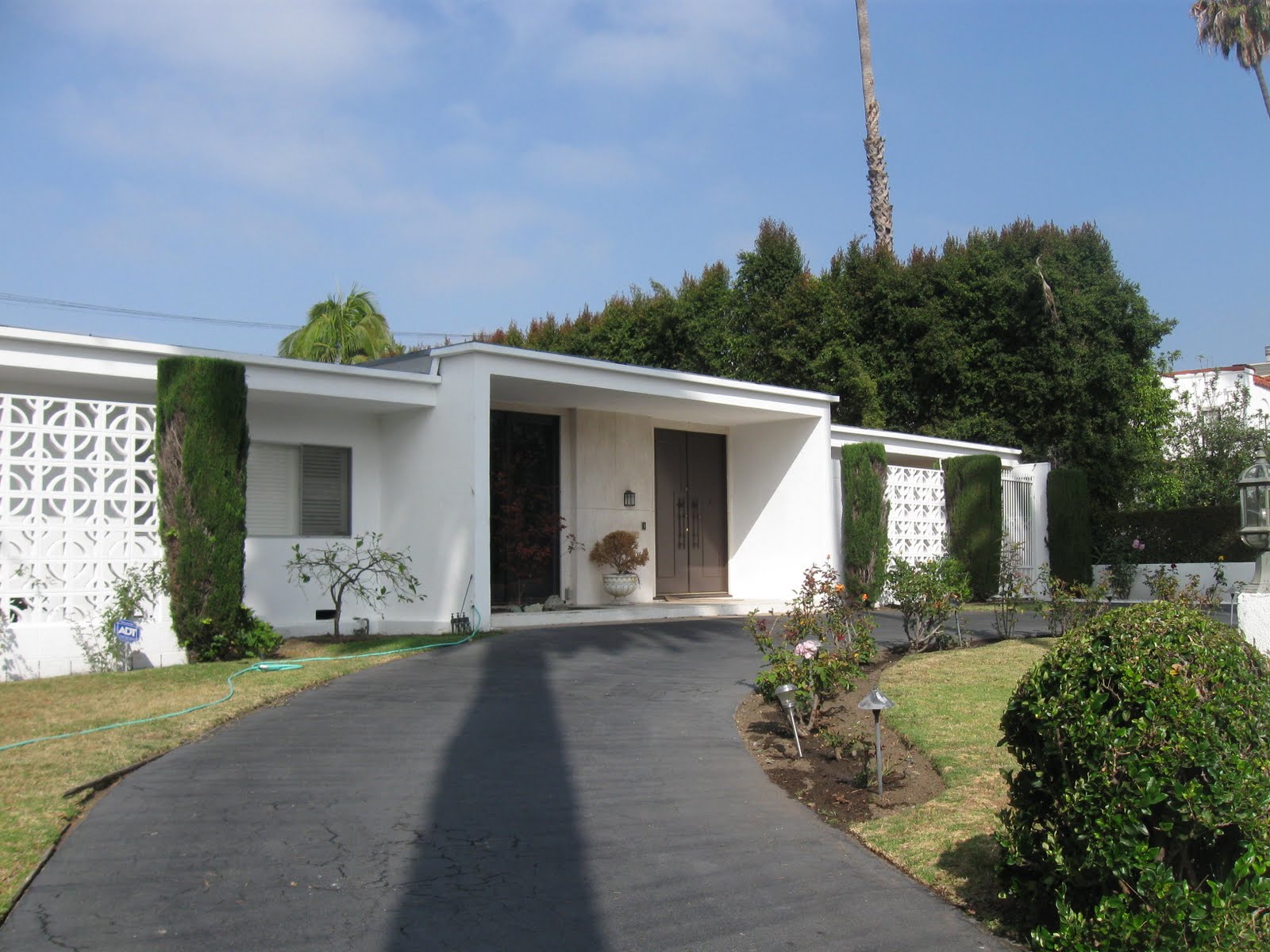
The Houses of Beverly Hills


“You can see all the stars if you walk down Hollywood Boulevard,” as Ray Davies of the Kinks so eloquently put it in his warm and melancholy song, Celluloid Heroes. But if you want to see how the stars of Hollywood live, you need to walk along North Beverly Boulevard.

While attending the Financial Times Business of Luxury Summit just over a week ago, most days I walked to and from the Luxe Hotel on North Rodeo Drive where I was staying to the Beverly Hills Hotel where the event was held. Since L.A. is a car-centric city, I had the wide sidewalks much to myself and the only obstacle I encountered was crossing the four-lane speedway known as Sunset Drive.

Judging by the houses I passed each day on the palm-tree lined street, I’d have to say the living is quite good and each house
displayed a bold and tasteful sense of individuality.

Some of the homes on the boulevard would be quite comfortable in a New England setting. Others looked toward Asia and Italy for their
architectural characteristics. Then there are the quintessential concrete structures with terra cotta roofs that are so popular in California. There are basic ranch houses besides elegant mansions. And wooden structures next to houses with slate facades. Traditional structures with elaborate columns that would be at home in the Garden District of New Orleans sharing space with sleek, modern houses at home in a urban setting. The landscaping in front of each is just as diverse in its look and
aroma. If there was one dominate flavor, it would have to be Jasmine.

Every house represents the character of an individual yet manages to enhance and embrace the neighborhood.


Thursday, June 17, 2010

‘Oh No, Not Larry Keengk’


The taxicab driver taking me to the Beverly Hills Hotel for the FT Business of Luxury Summit Monday morning is a native of Iran and is of Armenian descent. He was moaning on and on about the economy and other things when he suddenly yells in an angry, tired, frustrated voice that combines the unique cadence and flavors of the Middle East and Eastern Europe: “Oh No, Not Larry Keengk.”

The fog of jet lag and an early morning rising was still working its way in my head while I wondered, “Who the heck is Larry Keengk?” Then I looked to my right and there’s CNN talk show host Larry King skinny as a rail and wrinkled like a prune wearing jeans and a light brown leather jacket. His one hand was holding a cell phone against his ear and the other a cup of takeout coffee. There is no one else out walking on the commercial part of Beverly Drive.

King is oblivious to the irrational anger and frustration of the cab driver as he continues, “He’s out here every day (stressing the words as if King took a dump on the street in front of him each day). He talks for a half an hour and makes millions of dollars.”

I didn’t want to delve into the irrational anger caused by the site of a television celebrity but this type of emotion, commonplace throughout the world, must be intensified in Beverly Hills where those who ply their trade in television and film cross paths daily with others who have less prolific jobs.

It was a short drive to the hotel and the cab driver was quickly in a much better mood, as if getting that out of his system was what he needed to get though another day. Like a shot of espresso.

I think if Larry King moved, the cab driver would miss him.

Monday, May 31, 2010

Philly’s Phinest New Restaurant

Photo credit: M. McClellan

Iron Chef Jose Garces has taken the popular market-café concept and turned it on its head, taking it at least five steps above anything that’s available in Philadelphia. In fact, there may not be a place like this on this side of the Atlantic.

The Garces Trading Company has been the place I’ve been waiting for. I already told Maria that I’m leaving home to move into the restaurant. I’ll admit upon further review I was too gushy on The Philadelphia Inquirer’s food critic’s Craig LaBan’s chat (last post). But I still stand by my statement that this restaurant, café, market, whatever you want to call it, is easily the best new restaurant in Philly and may be the best restaurant in the city in terms of concept, quality, execution and value (value isn’t something one normally thinks of when it comes to a Jose Garces establishment).

On the market side of this food concept there’s cheeses and meats from Spain, Italy and France. There’s house made salami and country pâté. Included in the selection is Jamón ibérico, from the black Iberian pigs who roam free and live off a diet of acorns, herbs and roots. It’s the most expensive ham in the U.S. and until 2007, unavailable. Here, they serve it was a fine housemade mustard but it doesn’t need it. It melts in your mouth. There are canisters of infused olive oil, including black and white truffle oil (the real deal). They provide tiny throw-away cups and croutons to taste the selection. There’s nothing like earthiness and richness of truffle oil. You can buy the oil in branded, 12.8-ounce bottles. To go with the oil, there’s a vinegar bar. There are takeout meals, an on-site bakery with bread, pastries and desserts; and they have their own selection of blended coffees.

But what has everyone talking (and in the case of rival restaurateurs, fuming) is the state-leased wine boutique inside the market. The state-controlled wine system in Pennsylvania is as archaic as it is inefficient. It deserves its own story. To try to make it brief most people have to buy wine and spirits at a state controlled liquor store. The result is expensive wine with poor selection, unless you buy volume. Restaurants have a better selection but they pay nearly as much as customers, so, ultimately the customer pays even more. In addition, a liquor license for food and bars businesses is very expensive in Pennsylvania. The one good result out of this is chefs opening their own small BYO restaurants, where you can get great food in a casual atmosphere and pay retail for wine.

While restaurateurs have been complaining about this for years, Garces and his enormous brain figured a way around it where everyone wins. He convinced the state liquor control board to lease a space inside his restaurant. Inside the glass-enclosed boutique is a wonderful selection of 200 wines in a temperature controlled environment, almost all of them unavailable for retail in state liquor stores. You can select a bottle, pay for it at a dedicated cash register and then sit a table in the restaurant and enjoy it in the restaurant with fine stemware with your meal.

We’ve had lunch and dinner inside. We’ve had the Plats du jour twice for two: The bouillabaisse on day and the paella valenciana (with rabbit, gambas (shrimp), chorizo and fava bean salad) another. For lunch we've enjoyed the duck Lyonnaise duck salad (poached egg, duck confit, lardons and a mustard vinaigrette along with an omelet with a perfect custard-like texture. Without getting caught up in adjectives everything was exceptional in ingredients and execution (although I needed a magnifying glass to see the baby artichokes).

If you’re really fortunate, then you will have Brandon as a server, as we did for two of our three trips.

Enjoy it all you want. But you can’t move in. It’s taken.